Round, Teardrop, Diamond: What Padel Racket Shape Actually Changes
Padel racket shape changes balance, contact feel, and the cost of mistakes, but it does not tell the whole story of how a racket plays.
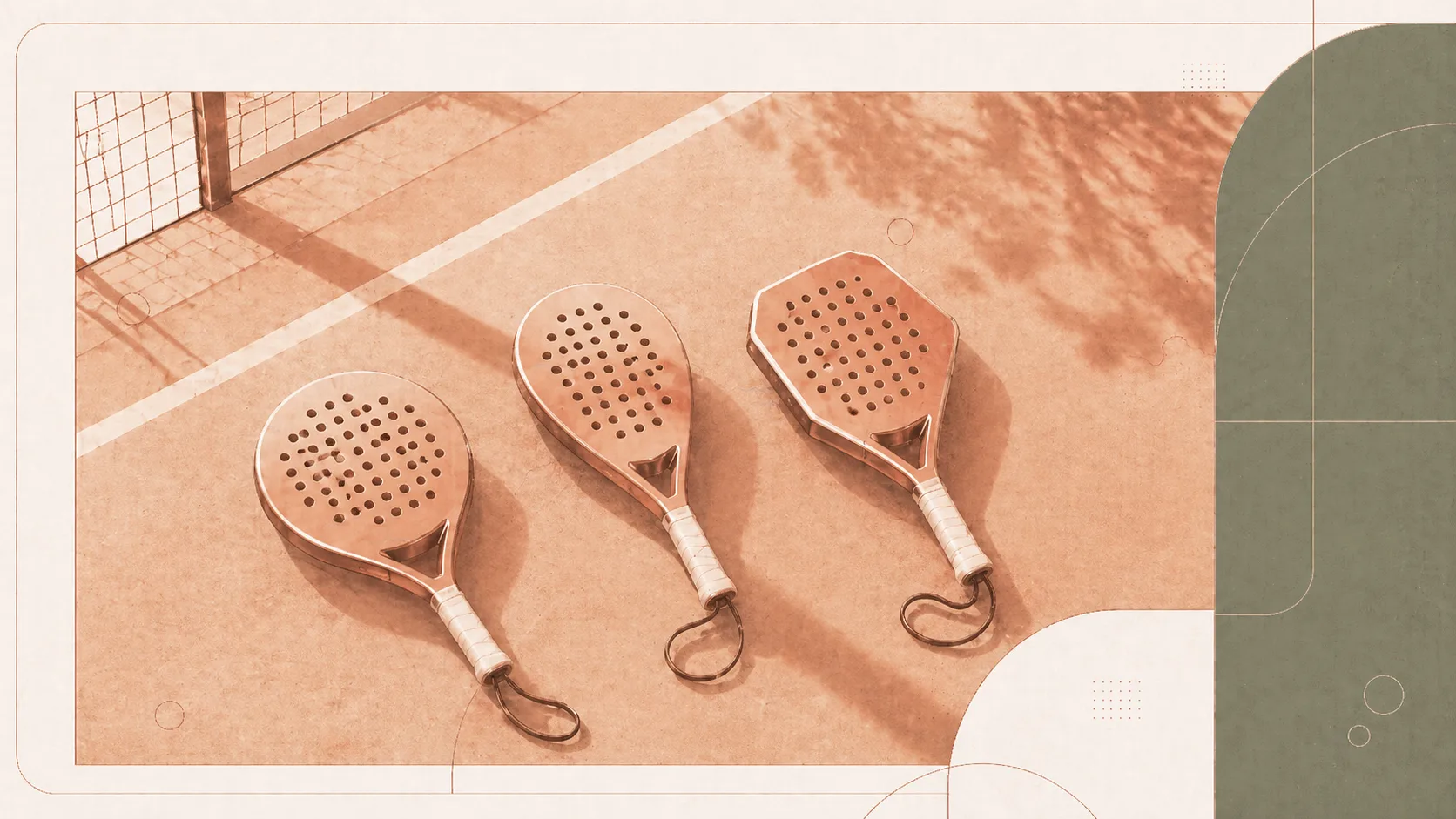
A padel racket shape is not a personality test.
It is easy to talk about rackets as if every shape has a fixed meaning. Round is control. Diamond is power. Teardrop is balance. That is a useful shortcut, and it is not completely wrong. But it is also too simple for how modern rackets actually behave.
The better question is not which shape is best. The better question is what the shape changes in your hand, and how much those changes matter once the ball is moving fast, the glass is involved, and your contact point is not perfect.
The practical answer is simple: rackets do make a difference. Not because a shape gives you a new game, but because it changes your margin for error.
Shape starts inside a fixed frame
Padel rackets do not have strings, and they do not vary endlessly in size. Official rules set the basic envelope: the total racket length cannot exceed 45.5 cm, the maximum width is 26 cm, the maximum thickness is 38 mm, and the hitting surface is perforated [1].
Inside that fixed frame, brands play with shape, balance, foam, carbon or fiberglass layers, hole patterns, bridge design, surface texture, and weight distribution.
That matters because when people say "shape", they are usually talking about three linked things:
- where the racket feels heavy
- where the best contact zone sits
- how forgiving the racket feels when you miss that zone
Shape influences all three. It does not fully determine them.
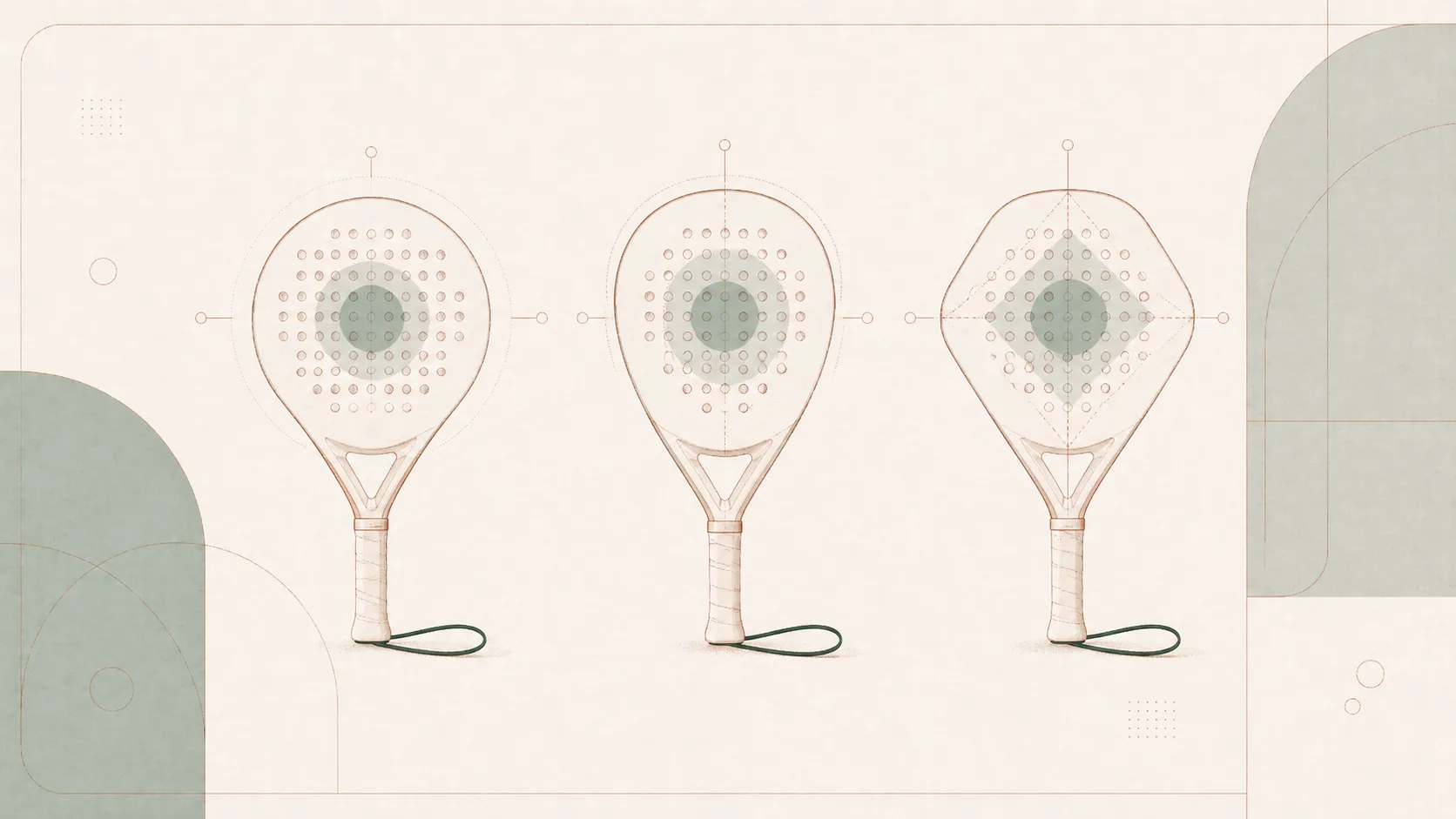
Round: the shape that gives you time
A round racket usually puts the sweet spot closer to the middle of the face and keeps the balance lower, nearer the hand. In plain terms, it tends to feel easier to move.
That makes a real difference in padel because many important shots are not big swings. They are small adjustments: blocking a volley, defending after the glass, getting the racket face under a low ball, or resetting the point when the opponent has taken the net.
Round rackets are often described as beginner rackets, which is a little unfair. Yes, they are friendlier for newer players because they forgive late contact and off-center hits. But the more interesting point is that they protect timing. They let you be a little late, a little stretched, a little out of position, and still put the ball back with shape.
That is not beginner-only. That is useful padel.
The tradeoff is leverage. A lower balance generally gives you less free weight through the top of the racket. If your game is built around finishing high balls, hitting aggressive bandejas, or trying to make the ball jump, a round racket can feel like it asks you to create more of the power yourself.
So round is not "easy mode". It is a choice toward control, maneuverability, and recovery.
Diamond: power with consequences
Diamond rackets push the opposite idea.
They usually carry more weight toward the head and place the sweet spot higher on the face. This can help on attacking shots because the racket has more leverage when contact is clean and in front of you. If you are taking high balls early, driving viboras, or accelerating into a smash, that extra head weight can feel addictive.
But there is a cost.
A diamond racket is less patient with messy contact. If the sweet spot is smaller or higher, a ball hit low on the face can feel dead, unstable, or harsh. The racket may also be slower to bring into position, especially in fast exchanges at the net or defensive situations after the back glass.
This is why diamond rackets can create a strange illusion. A player buys one for power, but the racket only gives that power when their timing is good enough to reach the right contact point. If they are late, cramped, or hitting below the sweet spot, the "power racket" can produce less useful power than a more forgiving shape.
Diamond is not automatically advanced, and round is not automatically basic. But diamond asks for more precision more often. It rewards clean contact and punishes lazy preparation.
Teardrop: the compromise that became popular
Teardrop is the middle ground, and in many ways it is the most realistic shape for modern club players.
The balance is usually neither very low nor very high. The sweet spot is often a little higher than round, but less demanding than diamond. The idea is simple: keep enough maneuverability for defense and transitions, while giving the player more weight through attacking shots.
That compromise makes sense because most padel points do not let you live as one type of player. You defend the glass, then block a volley, then lob, then take the net, then decide whether the next high ball is a bandeja, vibora, or smash. The racket has to survive all of those jobs.
For the widest range of club players, teardrop is usually the safest shape to understand first. But "safest for many" is not the same as "best". A defensive player who loves control may prefer round. A strong attacker with clean overhead timing may prefer diamond. A player coming from tennis may initially enjoy head-heavy power, then later realize they need more forgiveness when the point gets ugly.
Teardrop is not magic. It is negotiation.
The part most racket advice misses
Here is where the research gets more interesting.
The traditional explanation says shape controls sweet spot: round means big and centered, teardrop means medium, diamond means smaller and higher. That is directionally useful, and commercial racket guides still describe the categories around similar ideas: round for control and forgiveness, diamond for power and higher balance, teardrop for a blend [2], [3].
But robotic impact testing published in 2023 found the story is not that clean [5]. The study looked at sweet spot position, vibration behavior, balance, inertia, weight, and shape across many rackets. Its conclusion was important: there was no clear correlation between the sweet spot and the classical labels alone, including shape.
That does not mean shape is irrelevant. It means shape is not enough.
A racket is a physical object, not an icon in a buying guide. Two teardrop rackets can feel completely different if one is soft fiberglass with low weight and the other is stiff carbon with more mass in the head. A round racket can still be head-heavy. A diamond racket can be softened with foam and hole patterns. Modern "hybrid" shapes blur the categories even more.
Player-focused racket guidance makes a similar point from the court side: shape is one factor, but weight, balance, stiffness, materials, and model-to-model variation can change the response enough that you should not trust shape alone [4].
So the useful hierarchy is this:
First, shape gives you a clue.
Then balance tells you how fast the racket will feel.
Then stiffness and foam tell you how the ball comes off the face.
Then your technique decides whether any of it matters.
So, does the racket really make a difference?
Yes. But it makes a difference in a grounded way.
A racket affects how quickly you can get the face into position. It affects how stable the hit feels when you miss the center. It affects how much vibration reaches your hand. It affects how tired your arm gets after repeated volleys, overheads, and defensive blocks. It affects whether you trust the racket under pressure.
Those are real differences.
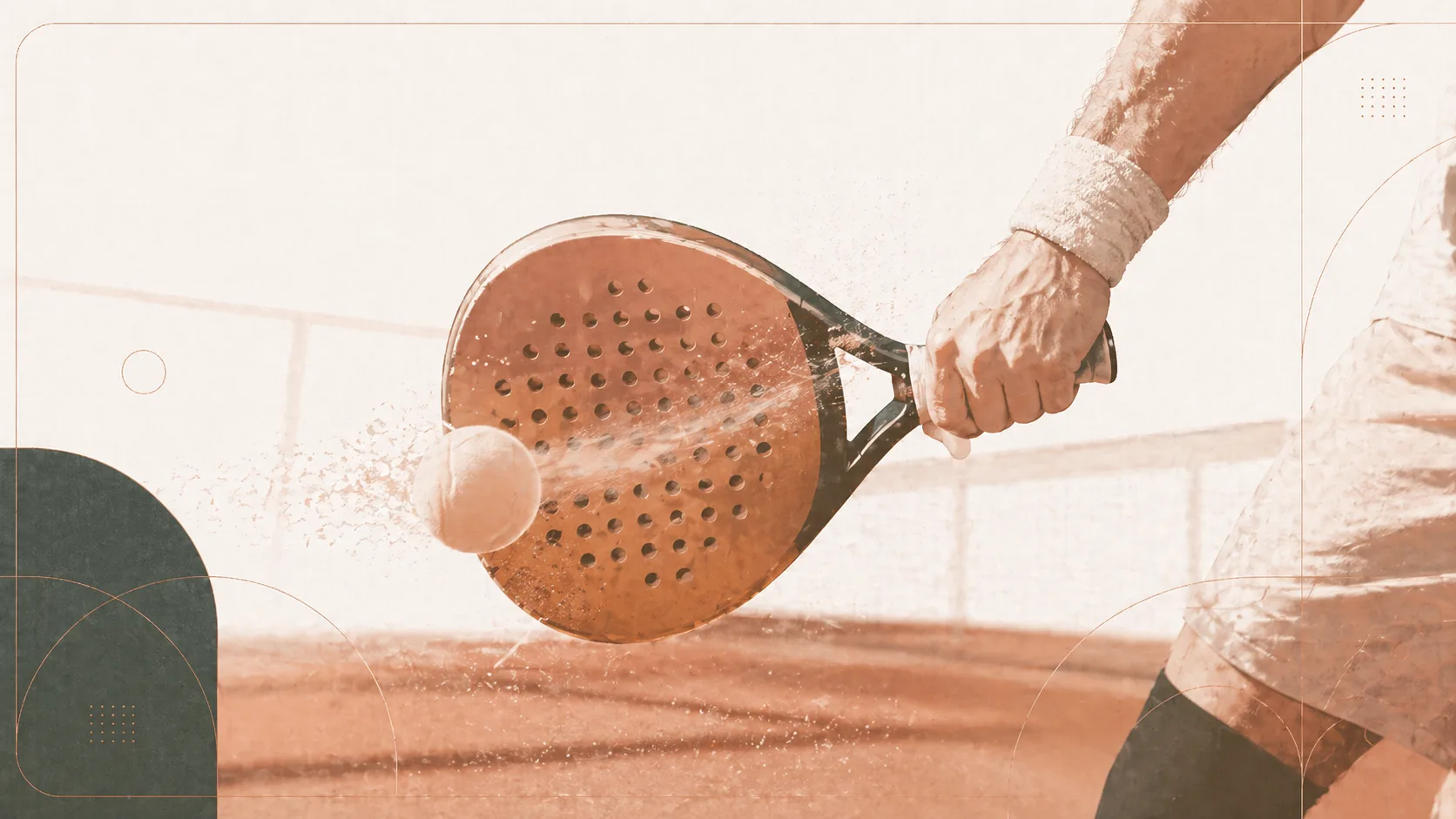
But a racket does not replace timing. It does not teach you to prepare earlier. It does not read the glass for you. It does not make a bad overhead decision good. It cannot turn a rushed swing into a clean one.
This is why shape debates can become misleading. Players ask, "Should I play round, teardrop, or diamond?" as if the answer will unlock their level. The better version is: where does contact usually miss the center, and what kind of mistake should the racket forgive?
If you often hit late, defend a lot, or lose control in fast exchanges, round gives you useful help.
If you want one racket to do a bit of everything, teardrop is probably the most sensible middle.
If you consistently contact high, early, and clean, diamond can give you more reward at the top of the swing.
The best shape is the one that protects your game
There is no universal best padel racket shape.
Round protects control. Teardrop protects versatility. Diamond protects attacking leverage, but only if your timing can support it.
The mistake is treating shape like status. A diamond racket is not a badge of level. A round racket is not a sign that you are basic. The best players are not choosing shapes to look advanced. They are choosing tools that fit the problems their game creates.
That is the more useful way to think about rackets.
Shape matters because it changes the cost of imperfect contact. It changes whether the racket helps you recover, helps you finish, or asks you to be more precise. But the racket is still only one part of the chain: feet, preparation, contact point, decision, then equipment.
The racket matters. Your timing matters more.